[ad_1]
What USA Basketball could learn from the Knicks’ chemistry for LA28
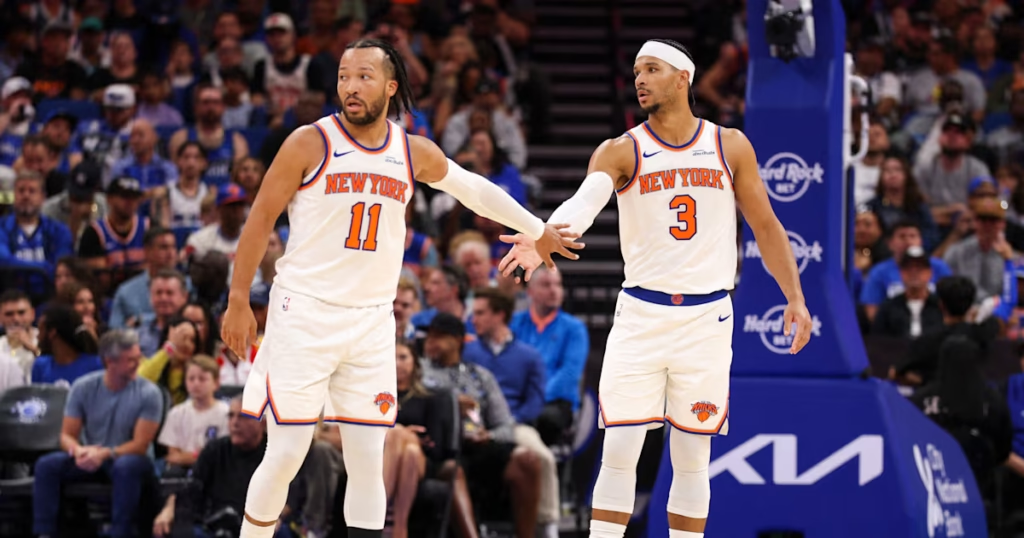
On paper, the 2026 NBA Finals looked an even match – plenty of commentators had the Spurs winning it all. But it soon became clear that while San Antonio boasted an otherworldly talent in Victor Wembanyama, the 2024 Rookie of the Year and a Paris 2024 silver medallist, the Knicks held a composure and cohesion the Spurs couldn’t match. Spearheaded by the Villanova three, it showed most vividly in the historic 29-point comeback New York mounted in Game 4.
“They all know how to play off one another,” Phil Booth, a former Wildcats teammate of all three, told The Athletic. “When you’ve been through so much together for so many years, you have a different level of connectivity.”
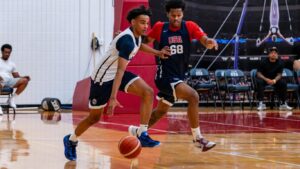
It’s a similar situation in the international game. The United States almost always fields the most gifted roster in any tournament. What it can’t guarantee is time. Olympic and World Cup squads assemble for a handful of weeks, learn FIBA’s wider lane, shorter three-point line, and physical play style on the fly, and then are asked to win gold against opponents who’ve played together for years.
Those tight windows have bitten before.
In 2023, the USA arrived at the 2023 FIBA World Cup with an A-list squad that notably included Brunson, Bridges, and Hart. But they ran into programmes whose cores had spent summers training together and hardening in continental events like EuroBasket and the Asia Cup. The USA would lose to eventual champions Germany in the semi-finals, and then drop the third-place game to Canada 127-118 in overtime (Canada, not coincidentally, employs a core senior commitment programme that asks players to commit for three-year cycles to build better chemistry for major tournaments).
[ad_2]
Source link